
Treasures from the Vault
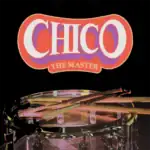
The Master
By the time The Master arrived in 1974, Chico Hamilton had little left to prove. For more than two decades, the drummer and bandleader had built one of the most distinctive careers in modern jazz, leading ensembles that quietly challenged convention through texture, restraint, and unusual instrumentation.
Meanwhile, Stax Records was undergoing a transformation of its own. Under Al Bell, the label was no longer content to define itself regionally, reaching beyond its Memphis foundation to establish a broader national identity. That vision included a growing presence on the West Coast through its Enterprise imprint and Los Angeles operations, where jazz, film scoring, and genre-blurring experimentation were becoming part of the label’s evolving scope. Enterprise, in particular, became a space where those experiments could take shape.
That kind of expansion opened the door for artists who had long worked between musical worlds, and Hamilton had been doing exactly that for years. Hamilton, an L.A. native, came up alongside a generation of musicians who would help define modern jazz, but he quickly distinguished himself with a more subtle, textural approach to rhythm. His early work included time with bandleaders Lester Young and Count Basie, as well as extensive touring with Lena Horne, before he gained wider recognition through his role in Gerry Mulligan’s piano-less quartet. By the mid-1950s, his own ensembles were already rethinking the structure of a jazz group, incorporating unusual instrumentation and emphasizing mood, space, and arrangement over traditional solo-driven formats.
His early work helped define a more spacious, chamber-like approach to small group jazz and introduced forward-thinking collaborators like Eric Dolphy. By the mid-1960s, he had moved further outward through a run of recordings for Impulse! Records and later Flying Dutchman Records. Albums like El Chico and The Dealer pushed his music toward sharper rhythms and early fusion, reflecting an artist less interested in preserving jazz orthodoxy than in expanding its possibilities.
At the same time, Stax’s growing presence in Los Angeles brought the label into closer proximity to artists working along those same creative lines. Its West Coast operations, often referred to as Stax West, were overseen in part by concert promoter Forest Hamilton, Chico Hamilton’s son. This placed the drummer within the label’s expanding orbit.
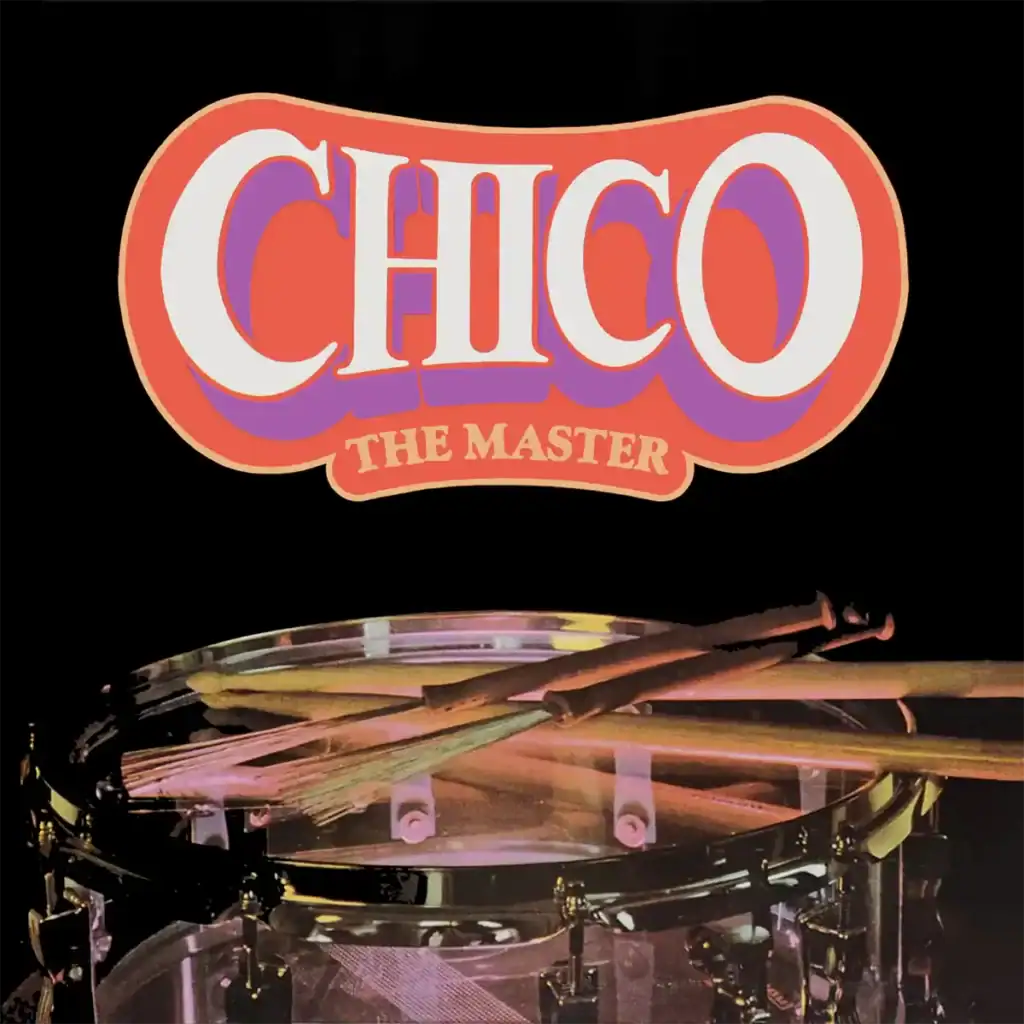 Within that context, The Master emerges less as a departure than as a point of convergence. Released on Stax’s Enterprise imprint, the album reflects a moment when a label rooted in Southern soul was reaching outward, and when an artist long committed to moving between musical worlds found himself operating within that expanded frame.
Released in 1974, The Master brings together a cast of musicians whose backgrounds mirror that same sense of convergence. Members of Little Feat, including Lowell George and Paul Barrere, contribute guitar work that leans as much toward Southern rock and blues as it does jazz. Keyboardists Bill Payne and Stu Gardner bring a harmonic richness that stretches across gospel, film scoring, and funk, while bassist Kenny Gradney and a layered percussion section ground the album in groove.
From its opening moments, the record makes its intentions clear. “One Day Five Months Ago” begins with a twanging slide guitar that feels closer to Southern blues than traditional jazz, paired with a lightly tinkering piano that evokes a kind of down-home familiarity. As the track unfolds, organ swells rise in a way that mirrors the fuzzy phrasing of an electric guitar solo, blurring the lines between genres while remaining rooted in a distinctly Black musical lineage. It is an unexpected introduction, but one that feels fully at home within Stax’s broader sonic world.
“Feels Good” builds on that foundation with a crisp, driving hi-hat pattern that recalls the rhythmic sensibilities of early 1970s film scores and the emerging language of disco, while a blues-informed guitar solo keeps the track tethered to something more grounded. “Fancy” settles into a midtempo groove that feels cinematic and contemplative, not far removed from the tonal palette that defined the era’s Blaxploitation soundtracks.
Elsewhere, the album reveals a deeper sense of interplay and restraint. “Stu,” written by Gardner, stands out as a tightly arranged, groove-forward composition that highlights his strengths as both a writer and collaborator. “Gengis” moves at a slower pace, built around a bassline that seems to dissolve as it unfolds, with organ lines responding in a quiet call-and-response that gives the track a meditative quality. A softly sliding guitar threads the two together, while understated percussion enters gradually, reinforcing Hamilton’s long-standing preference for texture over force.
“Stacy” comes closest to a traditional jazz structure, stretching out into a more open-ended performance, but even here the atmosphere remains light and expansive. There is a distinctly West Coast sensibility at play, unhurried, melodic, and immersive, suggesting a long drive through open space, lined with palm trees and washed in bright California sun.
In that sense, The Master is less concerned with redefining jazz than with dissolving its boundaries altogether. It reflects both Hamilton’s lifelong resistance to convention and Stax’s willingness, in this era, to embrace a broader musical identity. That the label could attract and support an artist of Hamilton’s stature speaks to its cultural reach and to the kind of artistic credibility Stax had built by the mid-1970s.
Today, the album stands as a document of convergence. It captures a moment when an established innovator met a label in transition, each expanding in ways that made room for the other. In doing so, The Master offers a glimpse of what Stax could be at its most outward-looking and what Hamilton’s music could become when placed within that wider frame.
by Jared Boyd
Treasures from the Vault Archive
Oct. 01, 2026
With A Little Help From My Friends
Sep. 03, 2026
Yesterday Is Gone
Aug. 06, 2026
Jammed Together
Jun. 23, 2026
Lou Bond

Jun. 05, 2026
Talking to the People
May. 01, 2026
INEZ FOXX AT MEMPHIS
Apr. 02, 2026
The Master
Mar. 04, 2026
Funky Sounds Buried in the Fertile Soil of Memphis That Smells of Rock
Feb. 03, 2026
The Many Grooves of Barbara Lewis
Jan. 08, 2026