Treasures from the Vault
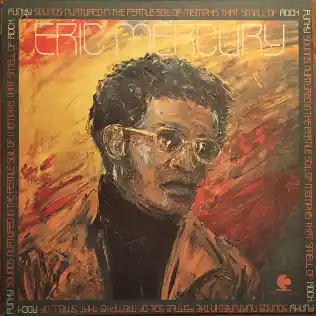
Funky Sounds Buried in the Fertile Soil of Memphis That Smells of Rock
Funky Sounds Buried in the Fertile Soil of Memphis That Smells of Rock
Boasting a stark, long-winded title, 1971’s Funky Sounds Buried in the Fertile Soil of Memphis That Smells of Rock leaves little mystery about its intentions. Before the needle ever drops, Eric Mercury lays out his premise: Memphis’ musical landscape is the lush locale where he will plant his hybrid of rock, rhythm, and soul.
But while the album tells you what it is, it does not reveal how improbable it was.
Released in 1971 on Stax Records’ Enterprise imprint, Fertile Soil documents a meeting of worlds: Toronto and Soulsville, countercultural rock meeting Southern rhythm sections, an artist in motion, and a label in transition. And while rock meeting soul might sound straightforward on paper, here the fusion produced a statement that would define Mercury’s career and secure his place among Canadian music’s innovators.
 Long before Memphis entered the picture, Eric Mercury had already carved out an unusual path. Born in 1944 to a Methodist minister and deaconess, he was raised in a deeply musical household that treated performance as both discipline and calling. By his teenage years in Toronto, Mercury had moved from family gospel settings into the city’s emerging R&B scene, performing with local groups like the Pharaohs and later fronting a seminal Canadian outfit dubbed the Soul Searchers alongside vocalist Dianne Brooks.
In the 1960s, Canada had yet to develop a clear infrastructure for soul music, offering few obvious label homes for artists interested in pursuing the genre just as it was exploding across the United States. As he prepared an ambitious entry into the style, Mercury positioned himself among the formative, pioneering voices of Canadian soul and set out to nurture his vision elsewhere.
Soon his band was based in New York, working the same circuit as the Doors and Jimi Hendrix, forecasting his fluency in rock and blues. His 1969 debut, Electric Black Man, released on Avco Embassy, blended politically conscious lyrics with psychedelic soul textures, inspired in part by the assassination of Dr. Martin Luther King Jr.
Just miles from the Lorraine Motel, where King was assassinated in 1968, Stax Records itself was entering a period of reinvention, primed for new voices and perspectives. Mercury’s arrival would prove perfectly timed.
The label that had defined Southern soul in the 1960s was no longer content to occupy a narrow corner of the record store. Under the leadership of savvy, streetwise label head Al Bell, the original Stax family was evolving to include new artists and imprints. Among them were the Staple Singers, who shared management with Mercury and helped open the door for his move south. Yet as Mercury entered the Stax environment, guitarist and producer Steve Cropper, one of the architects of the classic Stax sound, was transitioning toward independence through his Trans Maximus production company and TMI studio. Before cutting ties fully, Cropper fulfilled a final obligation to Stax Records, agreeing to produce two final albums, one of which would become Mercury’s debut for the label.
Cropper’s presence shaped more than just the production credit. Fertile Soil reads like a roll call of Stax’s collaborative engine. Songwriting contributions came from Eddie Floyd, Mack Rice, Mary Williams, Tommy Tate, and Carson Whitsett, alongside Mercury himself. The Memphis Horns provided their unmistakable brass punctuation, while Dale Warren, known for his sweeping work with Isaac Hayes, added cinematic string arrangements to select tracks. Behind the glass at TMI was engineer Jim Gaines, who had apprenticed under Cropper at Stax before following him to Trans Maximus. Long before working with artists like Steve Miller, Huey Lewis, Santana, and Stevie Ray Vaughan, Gaines was helping translate Memphis groove into tape, preserving the live energy that defines Fertile Soil.
If the album’s title announces its ambitions, the opening track confirms them. “I Can Smell That Funky Music” kicks off with a rollicking energy closer to early-’70s roots rock than classic Stax restraint. The groove carries Southern swagger, but the Memphis Horns keep it grounded in Soulsville. Mercury splits the difference, delivering grit with melodic control.
“Like It Should Be” showcases his range. The opening is restrained and sincere before building into fuller intensity, echoing the emotional lift of Stax contemporaries while retaining his rock edge. On “Stop Looking Down,” his gruffer tone moves into gospel-leaning territory, the arrangement swelling beneath floating saxophone and guitar lines.
Side Two looks forward in time, while grounding itself in the moment. “Don’t Stop the Feeling” rides a syncopated, percussive groove that hints at the dance-floor disco soon to define the decade. Elsewhere in the record’s runtime, Mercury threads poetic social commentary into these shifting textures, carrying late-’60s urgency into Memphis rhythm.
The result is elastic but cohesive. Rock is present throughout the album, but it is reshaped by Southern musicians fluent in the Stax tradition. Rather than sitting side by side, the genres push against one another, producing arrangements that feel unified rather than hybrid for novelty’s sake.
In the end, the album’s title proves accurate. Something was planted in Memphis in 1971. Not a reinvention, but a refinement. Eric Mercury arrived as a restless architect of Canadian soul and left with a deeper sense of grounding. Fertile Soil remains the document of that exchange, a reminder that the most enduring sounds often grow where different landscapes meet.
by Jared Boyd